November 25, 2026
Key things to check when planning a Niagara Falls trip from Toronto
By @niagarafallstourcentral
Getting from Toronto to Niagara Falls
The drive from Toronto to Niagara Falls is one of the most popular day trips in Ontario. The route along the QEW highway takes roughly 90 minutes without traffic, but weekend and holiday congestion can stretch that to two hours or more. Before you set out, check the QEW conditions online, especially around the Gardiner Expressway and through the Hamilton rest stop area. Construction work and accident delays are common, and a quick look at the current traffic can save you a long wait in a queue.
If you prefer not to drive, GO Transit bus service runs several times a day from downtown Toronto to the Niagara Falls terminal. The trip takes about two hours and drops you a short walk from the main tourist area. Booking your bus ticket in advance is wise, particularly on summer weekends and during the winter holiday season when seats fill quickly. One local option is Niagara Falls Canada Tours, which can help with coordinating your travel plans.
Timing your visit to the falls
Niagara Falls is a year-round destination, but each season brings different conditions. Summer offers warm weather and long daylight hours, making it the busiest time. Crowds at the viewing platforms can be thick, and hotel rates peak. Spring and autumn bring milder crowds and cooler temperatures, but some attractions may have limited hours. Winter is quiet and the falls can be half-frozen, which is a striking sight, but many outdoor walkways are icy and some boat tours close.
Weekdays, especially Tuesday through Thursday, are less crowded than weekends. If you are planning a one-day itinerary, starting early in the morning gives you a better chance of seeing the main sights without rushing. Afternoon arrival often means longer lines for the popular experiences and tighter parking options.
Parking and getting around once you arrive
Parking fees at the falls are not cheap, and the lots closest to the viewing areas fill up quickly. Check the official Niagara Parks website for current rates and lot locations before you leave. Some lots charge by the hour, others by the day. If you are staying overnight, your hotel may offer free or discounted parking for guests, which can save a significant amount.
Once you park, walking is the best way to explore the immediate area. The Niagara Parkway runs along the gorge and connects the main falls viewpoints. For a broader look at the region, consider renting a bicycle or using the local shuttle buses that run between the falls, the casino area, and nearby attractions. The shuttle can be a practical option if you want to avoid moving your car multiple times.
What to see and do at the falls
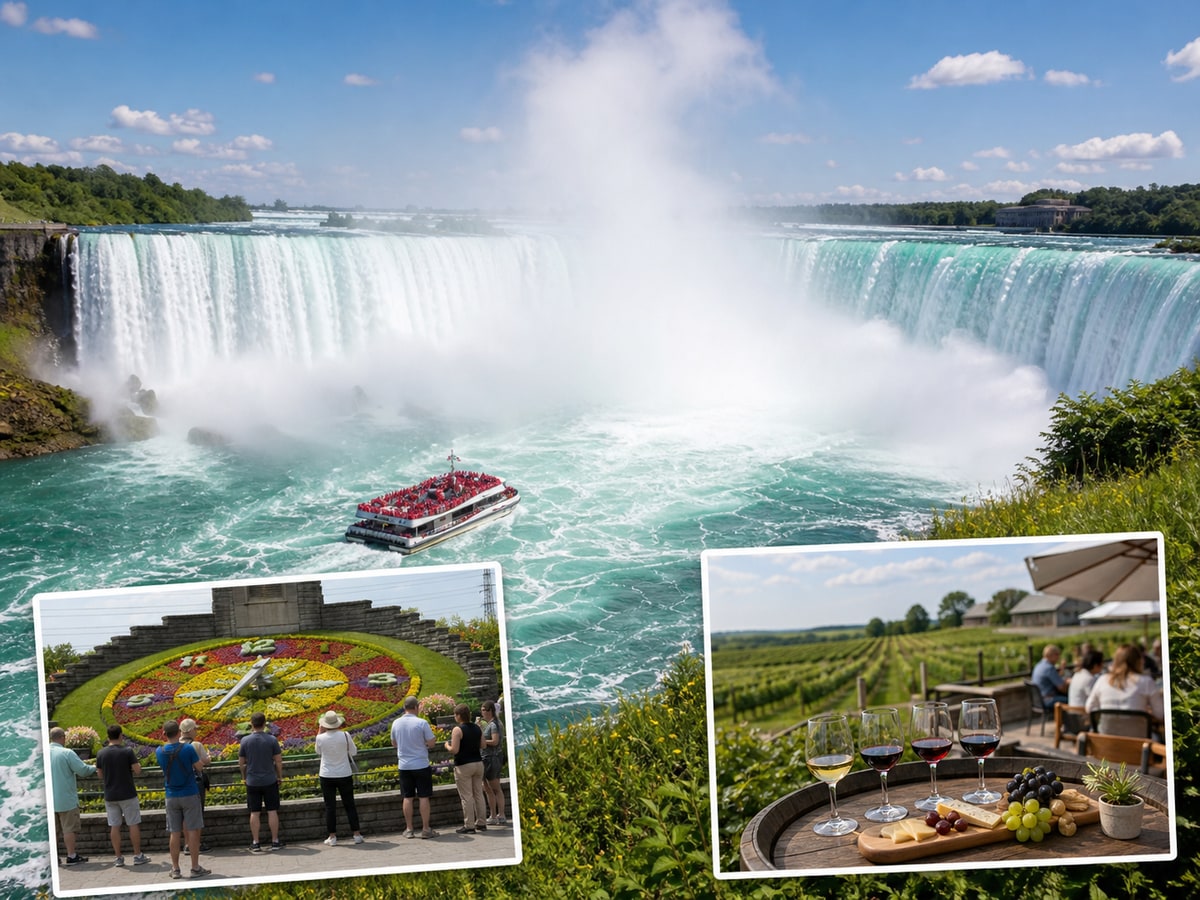
The main attraction is, of course, the falls themselves. The Canadian side provides the best panoramic views, especially from the Table Rock Centre area. From there you can see the Horseshoe Falls and the American Falls. Many visitors also take the Hornblower cruise, which sails close to the base of the Horseshoe Falls. The Journey Behind the Falls attraction lets you walk through tunnels that lead to observation decks behind the curtain of water. Both are weather-dependent, so check availability on the day you plan to go.
For a different perspective, the Niagara SkyWheel offers a slow ride above the skyline, and the Clifton Hill district is packed with entertainment, restaurants, and souvenir shops. If you have time, a short drive to Niagara-on-the-Lake is worth the detour. This historic town is known for its well-preserved 19th-century architecture, boutique shops, and the Shaw Festival theatre. It is also part of the St. Catharines wine region, so wine lovers can plan a tasting stop along the way.
Budgeting for your trip
Niagara Falls is a major tourist destination, and prices reflect that. Accommodation ranges from budget motels on Lundy's Lane to luxury hotels with direct falls views. Dining options are similarly varied. A sit-down meal near the falls costs more than the same meal a few blocks away. Packing snacks and a refillable water bottle can cut costs, especially if you are travelling with children.
Attractions charge admission fees, and the most popular ones often have combination tickets that bundle several experiences for a lower total price. Before you buy individual tickets, check the official attraction websites for package deals. The Niagara Falls Canada Tours official site often lists current offers and can help you compare options without visiting every site separately. That is one use of a resource that centralises details for the major sights.
Weather and what to wear
The microclimate around the falls means the area can be noticeably cooler and mistier than Toronto. Even on a warm summer day, the mist from the falls can soak you within minutes. A waterproof jacket or a poncho is a good idea. Comfortable walking shoes with good grip are essential, as the pathways near the falls are often wet and slippery. In winter, the wind chill near the water can be intense, so dress in layers and bring gloves and a hat.
Check the weather forecast for Niagara Falls, not Toronto, before you leave. Conditions can differ significantly between the two locations, and a sunny day in Toronto may be cloudy and drizzly at the falls. Rain can clear the crowds, but it also makes the viewing experience less comfortable.

Safety and accessibility
The viewing platforms and walkways are generally safe, but the mist and ice make surfaces slick. Take your time and hold onto railings. Do not climb over barriers or venture off marked paths. The water is powerful, and the rocks near the edge are unstable. Respect all signs and warnings.
For visitors with mobility issues, many attractions offer wheelchair access and rental equipment. The main viewing areas are wheelchair-friendly, but some older attractions have stairs. Check the accessibility information on each attraction's website before you go to avoid disappointment.
Making the most of a short visit
If you are on a tight schedule, prioritise the experiences that matter most to you. A typical one-day itinerary might include arriving by late morning, visiting the main viewpoints, taking a boat cruise, and then exploring Clifton Hill or the SkyWheel before heading back to Toronto. If you want to include a wine tasting in Niagara-on-the-Lake, plan to leave Toronto earlier or stay overnight to avoid feeling rushed.
Niagara Falls Canada Tours is also on Facebook.
Leaving later in the evening allows you to see the falls illuminated after dark. The lighting changes colour throughout the night, and the view is quite different from the daytime spectacle. If you are driving, the return trip on the QEW is usually lighter after 9 pm, which can cut your travel time.
Final practical checks before you go
Before you leave home, confirm your accommodation booking and any attraction tickets you have reserved. Print or save digital copies of confirmations, as mobile reception can be patchy in some parts of the falls area. Let someone know your itinerary, especially if you are travelling alone. Make sure your vehicle has enough fuel, as gas stations near the falls are more expensive than those on the outskirts of Toronto.
Pack a small bag with essentials: sunscreen, a hat, a waterproof layer, comfortable shoes, a phone charger, and any medication you need. Keep your valuables in a secure place, and avoid leaving them visible in your car. The Niagara Falls Canada Tours official site is a good resource for checking the latest visitor information and any alerts that may affect your trip, so it is worth a quick look before you set out.

With these checks done, you can enjoy your trip knowing you have covered the key details. Niagara Falls is a remarkable place, and a little planning goes a long way toward making the experience smooth and memorable.
For more information, contact Niagara Falls Canada Tours at Niagara Falls, ON, Canada, or call +1 647-477-1520.
❧